Friday, January 25, 2019

Updates. Goin South

Some updates set to Loyd's song, Goin South. It's from Human Project II, Humanized released in 2008.

Get some ribs on Beale and gin some cotton. Conversion shown in video is a Continental 161 converted to a 181.  This gin has a Lummus 700 feeder so don't be mislead on the ginstand part.
22 BPH. Yep. Kickin Ass.

https://www.youtube.com/watch?v=7pzvBcETPUo


Sunday, December 2, 2018

Quick Trip to Dallas and More

Loyd just took a quick trip to Dallas to meet with his partner Chris Nachtmann of CNC Performance Engineering in Charlotte, NC. They discussed strategies for 2019.  There will be more information coming out about this soon.

Here is a little video.  Loyd did a cover of Waylon Jenning song. Don't think Hank Done it this way. Its the music behind the video.

https://www.youtube.com/watch?v=2mFkWvZYmgM&t=18s


Wednesday, July 18, 2018


Cylinder Cleaning.
History and Random Tidbits


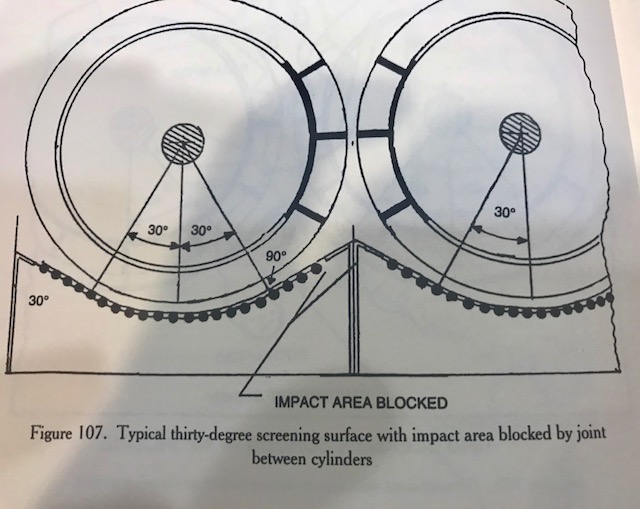
The use of early cylinder cleaner arrangements that were not confined to just the gin stand itself started in the early 1930’s.  When harvesting cotton became more mechanized, an entire host of new issues were brought to the gin in terms of trashy cotton with sticks, green leaves,bolls, burrs the entire spectrum of possiblities was front and center. This had to be dealt with to keep the cotton clean and grades acceptable. This led to the development of cylinder cleaner arrangements beyond what the feeder on the gin stand could accomplish.  The most common at the time were five to seven cylinder arrangements.  These a were of little benefit, causing even worse issues such as  roping, kinking, and neps.  Buyers of this cotton set a steep financial penalty for cotton like this.  To deal with this, the gins initially slowed the rotation speed of the cylinders down to 200-250 RPM.  This only provided minimal relief.  The manufacturers then flattened the screening surfaces to permit a less drastic transfer of the cotton from cylinder to cylinder. They came up with what we call a 30 degree wrap between the cylinders. Both of these actions reduced roping, but cleaning efficiency was compromised.  More trash was left in the cotton, less trash was extracted.  It was soon realized that  cotton with a higher moisture content was the main culprit.  The cotton was not conditioned or prepped enough to allow the cylinder cleaner arrangements to do much good at all. So this led to the mad rush to develop systems to effectively drop moisture content in cotton, prior to reaching the cylinders. (Drying)  Most common at the time were stub towers (eleven shelf) or USDA seventeen shelf varities.  Once the removal of moisture from cotton improved, so did the efficiency of the cylinder cleaners.  It is interesting to note that the 30 degree wrap that was used then,  still is the most common today.  Once Mr. A.L Vandergriff starting to analyze this arrangement while doing experimental work at Lummus, he changed this wrap to 40 degrees in 1949 in a feeder he designed.  This resulted in the screen going higher between the cylinders. He found this to be a critical area, and by increasing this angle, the cylinders engaged with the cotton even more and much greater trash removal resulted.  He also changed the support area from between the cylinders to under them.  By removing this support and little flange that protruded out into trash removal area, cleaning efficiency further improved.  


Early Arrangement with 30 degree wrap between cylinders.
Note impact area blocked reducing trash removal.


Vandergriff Arrangement 1949. Lummus.
Impact area open. More drastic 40 degree incline between cylinders
allowing for more cylinder exposure and trash release.


Vandergriff Arrangement. 
Supports under cylinders. 
Area between cylinders open to allow
for more trash removal.

Mr. Vandergriff continued using this arrangement in all his designs through the late 1990's and even increased the angle between the cylinders from 40 to 45 degrees. Cylinders were supported under, not between.  The ginning industry for the most part still uses a 30 degree wrap and continues to support thr screens between the cylinders. 

There is another important factor that affects the efficiency and operation of the cylinder cleaners and that continues to be drying.  While these early tower type arrangements did help, the inability to remove enough moisture left the gins with no choice but to slow the cylinders down and even slow the ginning rates down to maintain grades.  He are some little tidbits about drying and cylinder cleaning that I learned from my dad. 

You do not want a long pipe run from your dryer to you cylinder cleaners. Why?  The longer the run the more significant the temperature drop off of the cotton. Yes, you can overcome this but it requires more HP and BTU's. They will sell you a bigger heater. It is well known that cylinders operate and remove trash and foreign matter more efficiently when the cotton is warmer. And moisture reduction (drying) continues.  Good drying systems have little temperature fall-off between the entry point of the cotton and exit point.  You do not want an extreme drop off at the exit point, coupled with a long pipe run.  Your cylinder cleaners are placed in a difficult position with this arrangement.  The drying and moisture removal from cotton is three times greater at 200 degrees than 150 degrees. If your cotton exits your dryer at 150 goes on a long pipe run and then enters the cylinder arrangement?  Drying does not continue to any serious extent and trash extraction is seriously compromised.  If grades are being compromised and cylinder cleaners not getting the job done, heat is your friend. This also helps with roping, and neps as well.  Warm, well conditioned cotton that gets into the cylinder arrangments quickly lets them do what they are supposed to do in the most efficient way possible.  Use the Vandergriff arrangement for your screens under the cylinders see even better results.

Try to limit the number of cylinders the fiber is exposed too.  Some plants are overkill in this area, and fiber quality and integrity is compromised. This is just another reason not to have them as part of your dryer. More cylinders are not necessarily better if you have a good drying system and the cleaners are set-up right.  

If  you are using Tower type dryers, just know that any of them with shelf spacings under 12" are a energy hog.  Big static drop. They require the use of much more HP and BTU's to move the cotton along and try to maintain the temperature.  Even with this, there is considerable temperature drop-off from entry to exit.  There are still alot of stub tower's tucked away in many gins. The same thing applies to taller tower arrangements, and they have even more of a temperature fall off from entry point to exit.  The only really successful Tower Dryer arrangement was The Vandergriff Hot Shelf Dryer and Even Heat Dryer.  The cotton remained warm through the drying cycle and there was no drop-off in temperature at the exit point. Shelf Spacings were wider and vanes and bump-ups along the shelves created turbulance.

The cotton should be exposed to some type of "turbulent action," during the drying cycle. This starts the single locking process,  exposes the fibers to warm air, letting it flow around and through, and trash release and separation begins.  Now you have real moisture removal and drying is starting to occur. There should be minimal and preferably no exposure to any cylinder type situtations especially with screens or grids under them.at this point. The cotton can then enter your cylinder cleaner arrangement "conditioned" and it will let them do their job in a much more efficient manner.  The Vandergriff Jet Dryer has been highly successful in meeting all the criteria mentioned.

Much of this information was taken from "Ginning Cotton, An Entrepreneur's Story," by A.L. Vandergriff. Published by Texas Tech University in 1997. The book has sold out completely. If you have one you are lucky. If you have a signed one, you have a real treasure.


Loyd Vandergriff
Vandergriff Inc.
559-324-8848
vanderinc@aol.com


"Products of Vandergriff Research."
Made in the USA


Tuesday, May 29, 2018

Early Summer Updates

Hope everyone has got the cotton in the ground. Weather has been tricky in many area's with the elements from cold to rain getting in the way.

We are about to complete the first big run of Vandergriff  Continental Game Changers, well over 2000 parts.  Delivery date first week of June.  We then will start the second big run with a mid-July delivery date.  Then, close to a 2000 run Lummus, with August delivery date. This has been one of our bigger years. Toss in the Australian market earlier and the CNC machines in Charlotte, NC have been grinding away all year. The amount of ribs we get through these CNC machines is amazing.

If you haven't ordered ribs yet, we might be able to work in a few more sets of Continentals, but that will be it. As far as Lummus, we are up against the clock on delivery dates on any new orders.


Smaller Varieties of Seed

We have two sets of "test ribs" running in Australia. Loyd modified a key part of the Vandergriff rib to see how it would respond to the smaller varieties of seed.  Initial reports are outstanding, and we most certainly can incorporate this modification for the USA market. We also do offer a carbide option, if you gin a lot of cotton it maybe something for you to consider.


Loyd Vandergriff
559-324-8848


The industry standard for close to 25 years.
Made in the USA


Monday, April 2, 2018

Late Spring Updates

Great seeing many of you at the Mid-South Farm and Gin Show a few weeks back. Thanks for stopping by the booth and chatting.

As mentioned before, we are in unprecedented territory for pre-sales on our Vandergriff 161 Game Changer Rib.  As it stands now, we only have maybe 4 sets left to sell, with a delivery date of August.
We CNC machine all the ribs, a time consuming process but the key to our precision and accuracy.


Game Changer Forgings waiting to be CNC Machined.
1018 USA Steel.
Made in USA


On a side note, I still am amazed at some of things that float around in the industry regarding the Vandergriff Rib. I had one guy ask me the other day if it really is a forged rib.  He went on to say it looks rough on the backside.  Yep.  We machine the backside, but don't give it the finish that we give on the front side, and we don't plate it either.  No reason to.  Of course it is a forging.  Very expensive tooling developed by Vandergriff Inc and CNC Performance Engineering to get the forgings made. There are only a couple of forging places in the USA that have the equipment powerful enough to hammer these bad boys out.  CNC Performance engineering has been machining these parts for 22 years. They have the process down to keep prices as low as we possibly can.  

Many of you are getting cotton planted now. Hope its going good for you.  Beware of  some varieties of seed.  With more and more emphasis being placed on yield, the trade-off has been smaller and smaller seed. Some of these are getting to small to gin effectively.  

Monday, February 26, 2018

Mid-South Farm and Gin Show 2018

Look forward to seeing you all at the Mid-South Farm and Gin show in Memphis March 2, 2018.


Check out new video, "Let's Gin."

https://www.youtube.com/watch?v=n0zjfdSi8oM&feature=youtu.be


See ya there.

*This has been an unprecented year in terms of sales for The Vandergriff Gin Rib.   We are all the way out to July 2018 on delivery dates now with orders.  We are almost to our limit on what we can get machined and delivered for the 2018 season.


Vandergriff Inc
559-324-8848


Wednesday, January 24, 2018

Vandy Updates/Ribs

As we near the completion of January, we are entering record territory for pre-sale gin rib orders, especially for Vandergriff Continental Game Changers.  The current run we are now starting has a completion date of approximately June 1, 2018.  This is a huge run. All these people got their orders early.   We have started another waiting list for late summer delivery.  There will miminal availability for this one.  As most know, all Vandergriff Gin Ribs are CNC machined from 1018 USA steel forgings.  This forging process is only used by Vandergriff Inc.   CNC Performance Engineering  in Charlotte, NC has machined Vandergriff Ribs for 22 years. The combination of these two make the Vandergriff rib the elite gin rib in the business.  

We will also have a few sets of Vandergriff Ribs for Lummus Gin Stands availabe as well.


Vandergriff Game Changer Ribs.


No Gin Rib has the precision of Vandergriff Ribs.


Ribs shipping out to Australia.
Proudly Made in the USA
Where are your ribs made?


Loyd Vandergriff
559-324-8848


USA


Monday, January 15, 2018

New Year. 2018

Hope you had a great ginning season and the new year is off to a good start for you.

On the gin rib front, we have had unprecedented demand for 161 game-changer ribs. A waiting list was started for our first batch due for April 1, and this has already sold out.  We are starting another waiting list for early summer delivery. If you want game-changers for your Continental Gin Stand, you need to get on the list. There will be no third run.


Vandergriff Gin Ribs
CNC from steel forgings.
Most accurate rib on the market.
Stong.
Made in USA


Vandy Ribs Shipping out.
Made in USA.
Get those Chinese Ribs out of your ginstand. Mercy.


We will also have Lummus ribs ready by early summer as well. List going for those too.


Any questions, call:

Loyd Vandergriff
559-324-8848


Tuesday, December 12, 2017

Updates. Merry Christmas 2017!

We hope the ginning season is going well and wanted to wish all in the cotton ginning industry a Merry Christmas!

All is well at Vandergriff Inc. Gin Ribs. Conversions, Spiders, Jet Dryers. All in the marketplace doin their thing. People are finding out how functional all these products are. How cost efficient and user friendly they are as well.  Made in the USA!


We have been doing some work with the JG Boswell Company in Corcoran, so just putting up a few pictures for you.


Gin 5. Consolidated Roller Gins. 24 of em.
"A Product of Vandergriff Research'
"Best Roller Gin on the Market"
Ray Gomez, JG Boswell


Ray Gomez, Johnny Freeman, Loyd Vandergriff


Johnny, Loyd

Vandergriff American Spider.


Wishing you all a Merry Christmas and Happy New Year.


Loyd Vandergriff
559-324-8848


Tuesday, November 21, 2017

News


Hope ginning season is going well for you.
We are not hearing much about little seed being an issue in the USA here this ginning season yet. At least not as far as Vandy Inc is concerned.

Know we make ribs for all models of gin stands. This includes Cherokee stands.  No one can duplicate the way we produce them from a forging to a final CNC machined part from 1018 USA Steel.  Some of our customers have been running the same set of ribs for well over 10 years.  This is pretty cost effective.

Most know we are the pioneer in gin stand conversions. Mr. Vandergriff converted a Continental 161 to a 181 in 1996.  This went largely ignored until the mid 2000's.  Now this saw spacing is becoming the standard.  He set the standard for saw spacings many times over his illustrious career., and the rest of the industry tagged along. We have lots of conversions running around the world particularly in Australia.

This link below is a Lummus 170, souped up by Vandy Inc and associates. It is the first one we have done, and after working through some issues, we have it down if ya want to increase capacity without having to lay down huge chunks of money.  This would include of course  new gin stands (they love to sell you those) over-head, and even more. $$$$$$ (lint cleaning, press)  Conversions are the cost effective way to increase capacity.  They come with Vandergriff precision and the Vandy Gin Rib.


Souped up 170 Gin Stand
https://youtu.be/QnxIyQ2GwW8

Vandy Inc and Vandergriff American also sell the Jet Dryer.  Its starting to speak for itself with how it reduces moisture in a very cost effective way.  Gets the cotton single locked and ready to enter the inclines warm setting the stage for more trash release.  Mr. Vandergriff always said, get that cotton into the inclines at 175 degrees. Why? Simple. Get better trash release and cleaning.

Our Spider Installations are taking off as well across the cotton belt.

If you have any questions, don't hesitate to call.

Loyd Vandergriff  559-324-8848

John Freeman       229-220-1406 (Spiders, Jet Dryers)


Vandergriff Ribs Getting Ready to ship out.
Made in the USA

Thursday, October 19, 2017

External Factors that Affect Cotton Ginners

Updated August, 2018.
Refer to bottom of article.

For at least the last 50 years, many things have come down the pike that have in one way or another affected cotton ginners and the operation of the gin.   I use the word "external" in the title because ginners and gin plant owners usually are involved very little in the discussions regarding these changes, but of course they are heavily involved modifying their gins to accommodate them. By now, I think many of you are getting the drift of this, so I won't go into specific details regarding these types of situations that have come the gins way over the years. I have often wondered just how much "gin people" have been brought into this loop when these types of things start to get discussed. Maybe there are some committees or some "superficial" attempts to get ginner input, but one has to wonder just how well is the ginning side of the equation really represented?  I have seen some bad scenarios come the gins way that led to very costly modifications.  I doubt that the cost was shared in any way, and it fell squarely on the owner or owners of the gin.

Today, there is much R&D and competition among big cotton seed breeders to get seed to the grower and farmer that will significantly increase yield of cotton per acre. We all know who the big players in this game are.  While R&D on this side of the equation has done, and continues to do  much good, it would not be beneficial to have this research backfire on the other side of the equation and cause the gins difficulty. In order to obtain these types of increased per acre yields, in many cases the seed  have become smaller and smaller.   When these small seed cannot be extracted from the fiber at the gin stand, they  pass on through to the lint cleaners.  Here, they are ground up and mixed into the lint.  This will affect the grade of this fiber in a very negative way. This of course will not be well received by the farmer who wants and expects the best grades possible from the gin. It is important to know that some ginning operations are starting to show concern over these little seed, and their ability to gin it.

Gins that use products of Vandergriff Research, more specifically The Vandergriff Gin rib, have a great deal of success in removing the seed from the fiber during the ginning process.  The seed is extracted, cleaned thoroughly and then heads on down the line where it is supposed to go.  Over a 21 year period, Vandergriff Ribs have established a sterling reputation in terms of overall  performance in the gin stand, and preventing the loss of seed of all seed varieties.  We want the ginning industry to know that we are closely monitoring this situation related to these new varieties of seed, and will respond to it in  regions most affected, should this continue to be a problem.   It is important to note and understand, that is possible for the seed to get too small to effectively remove it  by any means from the cotton. Hopefully the ginning industry will have a dialogue with seed breeders about this important issue and monitor it closely, just as we are. The ginning industry is to be commended for the way it has responded to all the challenges that have come its way over the years and will continue to try and meet all new challenges that come its way in the future. We are proud to be a part of that.

Loyd made a modification to a Consolidated 222 rib running in Australia this season.  This cut down little seed loss substantially.  Another set of these modified ribs will run in USA this season.  This could lead to making this modification available to ginner's upon request.


Vandergriff Gin Ribs
CNC Machined from 1018 USA High Grade Steel
Precision and Performance.
Made in the USA


"A Product of Vandergriff Research"


Monday, September 25, 2017

Ribs and Miscellaneous

Ginning season is right on us, and some of you have already started, especially in South Texas.  Some of the crops may come in earlier than expected in the southern states as well.  Vandergriff Inc is already running ribs for export right now.  We have big orders to fill.  As soon as we complete this run, we will jump right in to making ribs for the USA market.  Most of you know that to make a Vandergriff Rib is very time-consuming.  From forgings we acquire (From 1018 USA steel) to CNC Machining each rib.  This is why its important to get your orders in as soon as possible. Even now  is not too early for the USA market.  When we order forgings, we can include your order and you will get yours in early spring.  Orders placed right after the first of the new year also have a good chance of delivery in early to mid-spring as well.  We now manufacture several models of ribs for different type of gin stands and this adds to time of production.  If we were running one particular model of rib, we could just let it roll.

We make ribs for:

Consolidated Gin Stands
Lummus Gin Stands
Cherokee Gin Stands
Continental Gin Stands

Our ribs are made in the USA.  Our competitors are for the most part, made in China, India or Pakistan.  There is no comparison in performance. Don't let your huge investment in a gin stand have its performance affected by inferior gin ribs.

We have a lot of our Jet Dryer installations running this season, along with many others that have been running for many years now. Cost effective drying.  I have written other blogs on this. Check them out.

We have a couple of other products hitting the ginning market soon.  Keep your ears to the ground and check here every so often. You will be hearing about them. :)


Jet Dryers


Vandy Ribs for Consolidated Gin Stands


Vandergriff Ribs shipping out for export.
Made in USA on boxes.

"Products of Vandergriff Research"

Wishing you a great season. We appreciate all our customers world-wide.


Wednesday, September 20, 2017

Ribs, Misc


Consolidated 164 Gin Stand

"A Product of Vandergriff Research"

These Consolidated Stands are "Built Tough." There are still a lot of them on the market ginning.  Not only 164's but 198's and 116's.  Our rib can most certainly can help this stand, and has helped it.
Don't tolerate ribs that are not straight, that tag and cause rib fires.  That misery alone will quickly pay for a set of Vandergriff Ribs.  Ours are CNC machined from 1018 steel.  Accurate. Straight. Vandergriff design.  Proven.  Purchase ours and let that stand gin. Worry about other issues in your gin plant.  We also have Vandy Ribs for their 184 and 222 saw models.  They have run. They have ginned. They are proven.  If you want some Vandy ribs get on the list ASAP. It is never too early to call.  This is the same for all models of our ribs. It is never too early to call and get on the list.

We hope your season gets off to a great start.  Gin that cotton! Hope to see you down the road.


Loyd Vandergriff
559-324-8848


Thursday, September 7, 2017

Late Summer Updates

Cotton is planted, and on a still night if you listen close enough, You can hear it growing.


Does this dryer look familar?


Continental Gin Company Counterflow Dryer 1950's
Note Cylinders at Bottom.

There seems to be a renaissance for this type of dryer, followed by large amounts of cylinder cleaner arrangements. This is a little history of this type of drying and why it ultimately faded. This information is taken from "Ginning Cotton, An Entrepreneur's Story," By A.L. Vandergriff. Pages 209-210.

Continental Introduced a counterflow dryer in the 1950's. It  was a unit consisting of a vertical box with spiked cylinders mounted inside in a vertical row, along the centerline of the box or chamber.  Adjacent to the cylinders on each side were long metal strips mounted on the wall of the box, spaced so that air could flow between them.  The cotton entered to top of the box by gravity onto the first cylinder, which knocked it onto the metal strips. These metal strips were sloped downward so the cotton could slide down them to the next cylinder. This process was repeated from one cylinder to the next. I believe there were four of these cylinders in the stack. Heated air entered the bottom of the box and traveled upward against the flow of cotton, thus the name counterflow.  Once I began increasing the capacity of the plants, it became necessary to split the flow and in doing this I added Tower Dryers, placing the counterflow dryers in series and following the Towers. This was done to primarily make use of the three cylinder cleaner under the counterflow dryers.  Currently, it is important to note deficiencies with the counterflow concept here and why and actual dryer had to be added prior to.  These dryers were never efficient. The fiber to fiber exposure to heated air was not as good as that in the Tower Dryers.  It seems that none of the drying efforts that tumbled cotton in bulk were efficient.  

We at Vandergriff American like to expose the cotton to drying and conditioning before getting into any type of cylinder arrangement, and we like to keep fiber exposure to any mechanical action (cylinders) to a minimum.  The action in our Jet Dryer requires no cylinders or any type of mechanical action. We create what we call a natural dynamic.  The cotton is conveyed to the top of the dryer in a  single stream and hits the top of our Jet, which is cylindrical. It then fans out in a 360 degree arc and begins its descent down the sides engaging the upspream flow of cotton. This dynamic creates turbulence and a swirling action that begins to single lock the fibers to allow warm air to flow through, and trash to begin to separate out.  It then exits out to the inclines or cylinder arrangement most gins currently have.  We get a nice even flow and even bat that allows the cotton to spread nicely across all the cylinders.  There is no need to add a horizontal cleaner arrangment with this. You can use what you have. If you are installing Jets in a new plant, the horizontal cleaner will work fine if this is the route you choose to go. There is mimium static drop with our system compared to a large number of cylinders that the cotton would be exposed to with a counter-flow/vertical flow type system. Remember, these systems start the drying process with cylinders involved.  All are in agreement that it is not desirable from a fiber quality point of view to let cotton be exposed to lots of cylinder's and too much aggressive mechanical action to dry and clean. Also note that with these counter/flow, vertical flow type "dryers," followed by a large number of cylinders, there is a real danger of roping and trash being embedded if this 1950's approach does not get the moisture content of the cotton down enough prior to entering the cylinders. Big risk here.  How much do you want to "slow down," on wet cotton to keep fiber quality up?  Our Jet's will work with your existing 8', 10' and even 12" cleaners in both stages of your operation. So, what you get with our system is a good drying dynamic without excessive cylinder exposure. It preps and conditions the cotton nicely and allows your existing cylinder cleaner arrangement to work more efficiently in terms of fine trash removal.  

"Don't let your cotton fiber be exposed to an excessive amount of cylinders, and then be run through 2 stages of "Shredders," (lint cleaners) before getting to the press.  The Fiber and the mills will appreciate you.


vandergriffinc.com

559-324-8848


Wednesday, August 2, 2017

Ginning Season on the Horizon


We hope the repair season has gone well. It was another good year for Vandergriff Gin Ribs, we appreciate all our loyal customers, and those that have installed our rib for the first time. You won't be disappointed.  Gin ribs are what we do and take pride in, from 1018 USA Steel that are forged into an accurate forging by a process that is hard to duplicate, and finally to the extreme precision of our CNC Machining.  And it is this precision in key areas that makes all the difference. We have been doing this for 21 years now and have the formula down especially in vital areas of the rib design. If smaller seed are becoming a consistent issue for you, we can take our existing design that is proven over time and slightly modify it to what we call for now, a Vandergriff "Extreme." This will most certainly deal with littler seed varieties.  If you are running even narrower saw spacings, our design will run smoother, not damage seed or cause rib fires, and you will not have to pull out the stand to blow out or clean ribs on a frequent basis.

There was some very bad information that spread through the industry about the need for a good rib for gin stands with narrower saw spacings. Our rib, unfairly got lumped into the category.  The source of all this did have huge issues with  ribs, but had never tried a Vandergriff Rib in their gin stand to try and remedy this issue. Statements like this are unfortunate for the industry.  Our rib for  gin stands that went to narrower saw spacings (Vandergriff 1996)  have been running and are running in  gin stands across the cotton belt and in Australia as well. Vandergriff Research was and is the catalyst behind the industry's move to narrow. We developed gin ribs to accommodate this. It is inconceivable that with so many of them running successfully in the industry (8,000+) that they would lose seed.  Again, if small seed are becoming troublesome, we can apply our Extreme design feature for you.

If you currently  ginning with Consolidated Gin Stands, we can help you.  164. 198. 184. 222.  We have ribs for you. They run good. They don't tag or start rib fires. You don't have to pull out the stands and clean them out.  Don't let gin ribs hamper the performance of your Consolidated Gin Stand.  It is a very good, well designed piece of ginning equipment. (A Product of Vandergriff Research)

Our Game Changer Ribs for Continental Gin stands are the Cadillac of Ribs for your Continental  gin stand.  Competitors talk a good game, but we always get calls and end up replacing them with ours.  Tagging, Fires. Breakage.  Just things you should not have to put up with from gin ribs.

We of course also provide Vandy ribs for Lummus 158, 170 and other model gin stands. Same Vandergriff Design and production process that has made it the Cadillac of ribs for 21 years. Many of these have been running in gin stands for 10 years or longer.  They simply change out the wearplate when necessary. The accuracy, strength and precision of this model rib has ruled the day since its inception.

Cherokee Gin Stand Owners?  We have Vandy Ribs Running in your stands as well. We can provide help for you too.  If you are going to wider gin stands up to 12 feet and have extreme horsepower on your roll box. You need a Vandergriff Rib to deal with these difficult stresses and strains put on the gin rib.   Don't let inferior ribs hamper performance of your gin stand. You have way too big of an investment for this to happen.

The Jet Dryer is also a product of Vandergriff Research and ginners are finding all about its unique drying features, energy efficiency and cost savings.  Not to mention good drying that continues on into the cylinder cleaners promoting more efficient trash release.


"Product's of Vandergriff Research"


Loyd Vandergriff
559-324-8848
vanderinc@aol.com


Wednesday, June 28, 2017


Rumors and misinformation about Vandergriff Ribs that run in gin stands with narrower saw spacings are proving costly for those that took the bait.


"We were told your rib lost seed."


Vandergriff Ribs are the Gold Standard in the ginning industry.
It's What We Do.


"A Product Of Vandergriff Research"


Tuesday, June 27, 2017

Mid Summer 2017

Summer is flying by.  We have been rocked by brutal heat in the Central Valley of California.  This has caused what was already an abnormal amount of snow in the high Sierra's to melt at a higher rate and rush down rivers and streams into reservoirs that simply can not handle this volume.  The only alternative was to "let it out," into the streams below. This of course has caused flooding down below in many areas.  Fortunately, the fertile Tulare Lake bottom has survived.  There were many bleak scenarios related to this, some as bad as 1969 that actually made the cover of Time Magazine.  But now, huge acreage of cotton will be planted, the biggest crop in years.  The entire cotton crop around the central valley looks as good as I have seen in many years.


The 1969 Flood was so serious that old cars were hauled in to place along the levee's to prevent erosion that could lead to serious compromise. A picture similar to this made the cover of Time Magazine.

1968 El Rico Gin

J.G Boswell's El Rico Gin had to be completely dismantled and hauled into the town of Corcoran and stored until the threat of the flood was over. Then, rebuilt.
This gin had many first for the industry.

World's First 40 BPH Gin plant.
First to have bales strapped naked at press.
First to have Automatic Trailer dump
First 10 foot cleaning equipment.
First drying systems to handle these types of capacities.
Design Engineer. A. L Vandergriff

We are glad the that things did not reach this level of seriousness with the heavy snowpack of 2017. This will allow companies like J.G. Boswell and other central valley farmers to plant as much cotton acreage as they like. Good news indeed.  

More news:

Vandergriff Inc has several projects going now that give cause for some excitement as the gin season approaches. On the gin rib front, we were thrilled we could help out a couple of gins that had ordered and  received new gin ribs that were not straight, making it all but impossible to even get them installed.  We happened to have enough in our inventory to supply them and solve this issue for them. You all know that Vandergriff Ribs will never show up to a gin with issues related to straightness.  We have pretty much sold out of all models of our ribs now.  That's usually the case when it gets to be this time of the year.

We got many of our Jet Dryers in some nice gin plants this spring and summer as well. In an environment where energy costs are a real factor, these dryers are extremely efficient to operate.  Lots of natural single locking action going on in the dryer that prepares the cotton to do a better job of releasing trash when it hits the incline cylinder cleaners.  More and more ginner's are seeing the benefit of switching over to Jet Dryers to dry and condition their cotton while saving money on energy costs as well.

We hope as gin season fast approaches, that it will be a good season for everyone.  Don't hesitate to give us a call.

Loyd Vandergriff
559-324-8848
vandergriffinc.com

Friday, June 9, 2017

More Gin Rib Updates.

There continues to be discussions and debate on design of gin ribs, especially when it comes to relief sections for ribs running in stands with narrower saw spacings,  I will again emphasize that Vandergriff came up with the current spacings in 1996.  Along with this, he developed a rib to go with it.  In doing so, he chose not to abandon the type of relief section that he had used in all ribs Vandergriff Inc. had manufactured up to this time.  The Vandergriff Rib was already well on its way to becoming the standard in the industry. This relief section, coupled with the skilled use of CNC Machining from a 1018 steel forging contributed heavily to the success and performance  and reputation of Vandergriff Ribs.

There continues to be emphasis by some that this relief section needs to be narrowed, or closed up more to deal with seed loss. This argument is presented by competitors that have had serious issues in this area.  We have not had these issues with the Vandergriff  Rib and see no need to change our current arrangement.  Please take note of the following.


Vandergriff 181 Gin Rib for Continental Gin Stand


This Gin Rib is used on the 161-181 saw spacings established by Vandergriff in 1996. We worked with Namoi Cooperative in converting their 161-181 saw gins. Ultimately they ended up with 20 converted gin stands, all running the Vandergriff Game Changer rib with our standard relief section.  They are not losing any seed with our design. Overall, there are a total of 26 gin stands overseas and in the USA  with narrow saw spacing's running the game changer with this relief design. None. Zero, report any seed loss.

Given this type of success,  it was only natural that we apply this same relief design to our Vandergriff  Rib for Consolidated 184/222 saw gin stands. These stands use the same narrow saw spacing's as the Continental 181. (Vandergriff, 1996 spacings)

Given all the talk through-out the industry related to this, I decided to make some inquiries on how our Ribs are currently performing this season.

Chris Veness at Southern Ginning in Australia is running our rib in all 4- 222 saw gin stands in one of his plants.  When I enquired how the ribs are performing he said: "The new seed varieties make it more difficult to clean the seed, so we are having to gin at a slightly lower ginning rate, but we are not seeing an issue with seed loss." We continue to be very happy with the ribs, and all 4 gin stands run non-stop."

I called Jackson Hammack at Early Country Gin in Georgia.  He has two of his three 184 gin stands running our rib. He said, "We have no issues with the Vandergriff  Rib. We certainly have no issue with seed loss.  We push these stands up to 20 bales per hour plus and they just gin.  We most certainly can not do this with our other gin stand that is running conventional gin ribs.

All Vandergriff Ribs use this Vandy Relief design.  This, coupled with precision CNC work from 1018 steel forgings allow ours to perform at high levels. From Lummus 158-170. To Continental 141-161-181. We have them running in Cherokee Stands as well. Their performance in all these stands over time has helped establish the rib as the premier rib in the industry.  But even with this well earned reputation, there can be exceptions to the rule when it comes to performance.  These exceptions are difficult to understand or explain. It could be as simple as the ginning point being off, tooth lead not in proper location, or the rib rails themselves not located or installed accurately.  Other gin stand issues and settings could come into play.  I would only comment from a Vandergriff perspective that any issues such as seed loss and performance are extremely rare with our rib and most often  caused by issues that are not rib related.


Loyd Vandergriff
559-324-8848
vanderinc@aol.com


Thursday, May 18, 2017

Vandergriff Inc. Late Spring Updates

Hope the repair season is going well and hope the outlook for cotton crops across the cotton belt are looking good.  A few observations and updates are in order.


There continues to be rumblings through the industry of a need for a gin rib that will not lose little seed, especially on gin stands that have gone to narrower saw spacing's.  This could come from a conversion of an existing stand, or a new gin stand that has incorporated these saw spacing's into their product line. These rumblings come from people that have never run a Vandergriff Rib in stands with narrower spacing's. This is very disconcerting. None of our gin ribs for any model of gin stand or any saw spacing has ever let seed escape. Ever. Customers who run them will readily document this.  Any loss of seed through your ribs is not acceptable.  We have ribs for all models of gin stands. Vandergriff Inc was the pioneer in the move to narrower saw spacing's and when the need arose, developed gin ribs to deal with this as well.  Managers from big gin operations in Australia that had purchased big gin stands with narrow saw spacing's reached out to us to help them with their gin rib issues. We responded.  Their issues were solved.  Whatever  model gin stand you have whether its a conversion or a new gin stand, we can help you. You don't have to "settle" for the status quo which is not working out well for you or wait for them to continue to try and develop a rib to solve this. We already have one.

Mr. Vandergriff did a lot of research on narrowing the saw spacing's in 1996.  He converted a 161 saw gin stand to a 181. This conversion ran for close to 10 years before people finally took interest in its real potential for capacity increase and seed cleaning capabilities. Could he have gone even narrower?  Understand this was a radical move for the time.  His research indicated this would be the optimum spacing to increase capacity and clean seed without issues developing. Vandergriff Inc continues to believe this spacing to be the ideal spacing.  Any effort to "narrow this down" further will bring in complications that he strongly considered at the time. All of our conversions and work we do in this area use his 1996 gold standard spacing.  All our ribs go hand in hand with this. With any gin stand that is using narrower saw spacings, a strong, accurate CNC machined gin rib is essential. We have it.

Keep checking for updates on what is going on with Vandergriff Inc. We have exciting projects in the mill. We have outstanding drying system options with our Jet Dryer, and Spider to deal with round modules that our becoming more and more the standard.


Loyd Vandergriff
559-324-8848


Monday, April 3, 2017

Texas Cotton Ginners Trade Show

Vandergriff Inc. will be at the Texas Ginners show April 7,8 2017.  Drop by our booth and say hello.
We have products from gin ribs to Jet Dryers to gin stand conversions to the Spider round module unloader.

Hope to see you there.

Vandy Ribs For Consolidated Gin Stand


Ribs being CNC Machined from Steel Forgings for unparalled accuracy and strength


Vandergriff/American Jet Dryers in Australia


Game Changer Ribs shipping to Australia


Loyd Vandergriff
559-324-8848
vanderinc@aol.com